Semaglutide Dosage & Reconstitution in 2026
How compounded semaglutide is dosed, mixed, and injected. A common weekly titration schedule, plus why the number that matters most is the one your prescriber sets for you.

Semaglutide is a once-weekly injection that starts at a low dose and steps up slowly over months, a process called titration. Most protocols begin around 0.25 mg per week and increase every four weeks, but the schedule that matters is the one your prescriber writes for you.
Here is how dosing works, how to reconstitute a vial, and how to measure a dose on an insulin syringe, all done the pharmacy-grade way. Getting ahead of your metabolic health is a smart step, and this is how to do it right.
The semaglutide titration schedule
Semaglutide is increased gradually so your body adjusts and side effects stay manageable. A widely used schedule follows the one studied for branded semaglutide: start low, hold each dose for about four weeks, then step up. Your prescriber may move faster or slower, or hold you at a lower dose, based on how you respond. This chart is a common reference point, not a prescription.
How popular is Semaglutide?People search for Semaglutide about 370,000 times a month in the US, one of the most-searched peptides (2026 search data). See the Peptide Popularity Report for the full ranking.
| Weeks | Weekly dose | Purpose |
|---|---|---|
| 1 to 4 | 0.25 mg | Starting dose, lets the body adjust |
| 5 to 8 | 0.5 mg | First step up |
| 9 to 12 | 1.0 mg | Second step up |
| 13 to 16 | 1.7 mg | Continued titration |
| 17 and on | 2.4 mg | Common maintenance dose |
The goal of titration is comfort, not speed. Moving up too quickly is a common cause of nausea, so many people hold a dose an extra few weeks. There is no prize for reaching the top of the chart, and plenty of people do well below it.
How to reconstitute a semaglutide vial
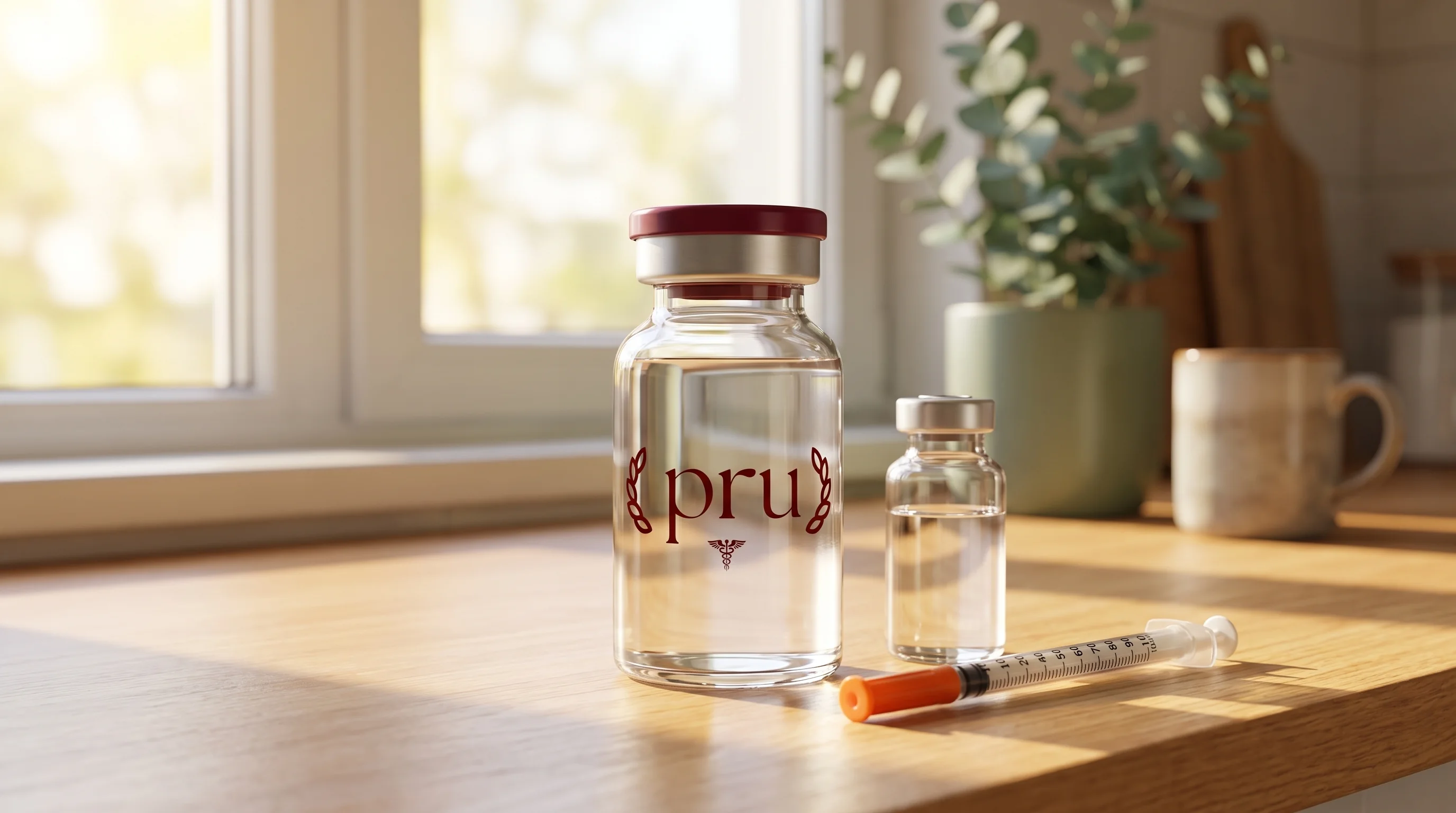
Some compounded semaglutide ships ready to inject, and some ships as a freeze-dried (lyophilized) powder you mix yourself with bacteriostatic water. If yours needs mixing, your pharmacy label tells you exactly how much water to add. Follow that label, because the amount of water sets the concentration, and the concentration is what turns your prescribed milligrams into marks on a syringe.
- Let the vial and bacteriostatic water reach room temperature, and wipe both stoppers with an alcohol swab.
- Draw the exact volume of bacteriostatic water your label specifies into a syringe.
- Inject the water slowly down the inside wall of the vial, aiming the stream at the glass rather than at the powder.
- Swirl gently until the solution is clear. Do not shake, which can damage the peptide.
- Label with the date and store in the refrigerator. Use within the timeframe your pharmacy gives you.
Why concentration mattersTwo vials with the same milligrams can need different syringe marks if they hold different amounts of liquid. Never guess. Use the concentration on your pharmacy label, and if the math is unclear, ask the pharmacy before you dose.
How to measure and inject a dose
Semaglutide is injected under the skin (subcutaneously) once a week, usually in the abdomen, thigh, or back of the upper arm. It is measured on a U-100 insulin syringe, the small syringe marked in units, not the large syringes used for other injections. Your dose in milligrams converts to a number of units based on your vial's concentration.
- Rotate the site each week so the same spot is not used repeatedly.
- Pinch the skin, insert at the angle your clinician shows you, and inject slowly.
- Pick a consistent day of the week. If you miss a dose, follow your prescriber's guidance rather than doubling up.
- Never share a vial or a needle, and dispose of needles in a sharps container.
If you are unsure how many units your dose works out to, use our dosing calculator or confirm with the pharmacy. Getting the units right is the single most important step, and it is where most avoidable problems with compounded vials happen.
How dose relates to side effects
Most semaglutide side effects are digestive and tend to appear right after a dose increase: nausea, fullness, or constipation. That timing is exactly why titration exists. Slowing down, holding a dose longer, or easing back a step usually settles them. For what to expect and how to manage it, see our guide to semaglutide side effects and results.
When to call your clinicianSevere or lasting vomiting, signs of dehydration, or intense abdominal pain are reasons to stop and contact your prescriber promptly rather than pushing through. Dosing is a clinical decision, and your prescriber would rather hear from you early.
Who should not take semaglutide
Semaglutide is not right for everyone, and that is decided before any dose is set, not after. It is not used by people with a personal or family history of medullary thyroid carcinoma (MTC) or Multiple Endocrine Neoplasia syndrome type 2 (MEN 2). It is also stopped ahead of a planned pregnancy. These are firm contraindications, and a licensed physician screens for them at intake so the medicine only reaches people it is appropriate for.
- A personal or family history of medullary thyroid carcinoma (MTC).
- A personal or family history of Multiple Endocrine Neoplasia syndrome type 2 (MEN 2).
- Pregnancy, or a pregnancy you are planning. Semaglutide is stopped before a planned pregnancy.
This is what intake is forWith pru, this screen is not a checkbox you clear on your own. A licensed physician reviews your history, asks about these conditions, and does not prescribe if a contraindication is present. Tell your prescriber your full medical and family history, and about any pregnancy plans, so the decision is made with the full picture.
What semaglutide microdosing is
Microdosing semaglutide means a lower, slower schedule than the standard titration above, one that some clinicians use to ease side effects while a person adjusts. It is clinician-directed, not a shortcut and not a way to stretch a vial on your own. The dose is still individualized, chosen by your prescriber for how your body responds, and it steps up the same way, just more gently.
If digestive side effects are the concern, microdosing is one tool a prescriber might reach for, alongside simply holding a dose longer. It is a clinical choice, so it starts with a conversation with your clinician, not a smaller number you pick yourself.
How pru handles dosing
With pru, a licensed physician sets your titration and a 503A pharmacy fills your prescription, so your dose is a clinical decision rather than a guess off a chart. Every vial is labeled with your name, your prescriber, and your concentration, and it ships with a Certificate of Analysis so you know what is in it.
The peptide is priced at cost, itemized, with no markup on the medicine. Deciding to act on your metabolic health is the smart, responsible move, and pru exists to make that choice the accessible one: licensed physicians, pharmacy-grade medicine, and at-cost pricing in one place. When you are ready, start with semaglutide, read the full compounded semaglutide guide, or browse the weight loss and metabolism catalog.
Related reading
- Compounded semaglutide, explained
- Semaglutide side effects and results
- Semaglutide vs Ozempic and Wegovy
- Where to buy compounded semaglutide
- see it on pru
Common questions
Sources & further reading
- U.S. Food and Drug Administration. Wegovy (semaglutide) injection, prescribing information. fda.gov. (Approved titration schedule referenced for context.)
- U.S. Food and Drug Administration. Compounding and the FDA: Questions and Answers (compounded drugs are not FDA-approved; 503A). fda.gov.
- United States Pharmacopeia. USP General Chapter on sterile compounding standards. usp.org.
- pru dosing calculator, product and pricing pages. joinpru.com. Accessed July 2026.
- In U.S., GLP-1 Usage Reaches New High (Gallup, 2025): about 1 in 8 U.S. adults have used a GLP-1 medicine.