GHK-Cu Before and After in 2026: How to Read the Photos
What GHK-Cu can do for skin, how to read a before and after, and what the research shows.
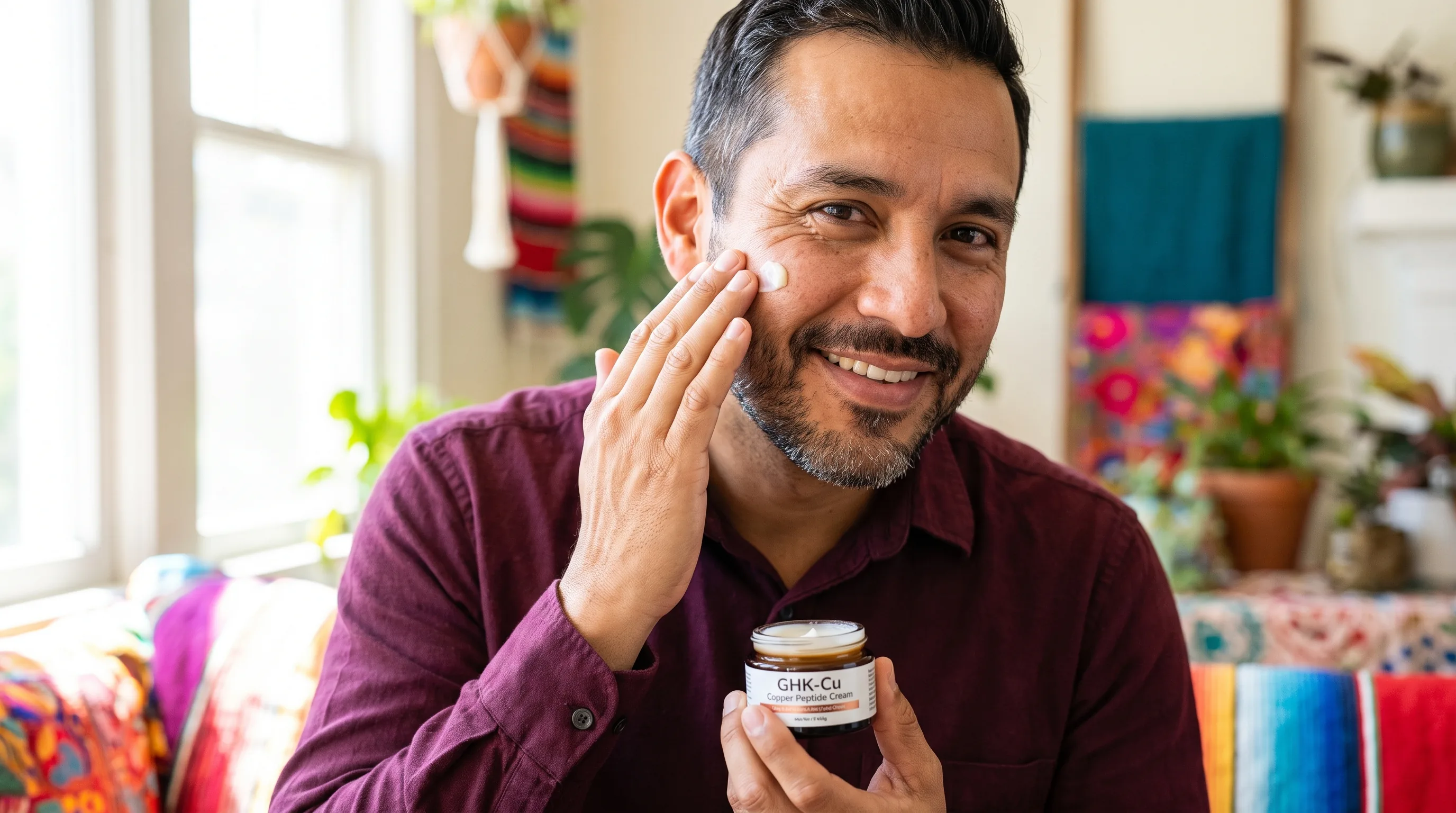
A GHK-Cu before and after shows what the copper peptide can do for skin over weeks: smoother texture, more even tone, and a firmer, healthier look. GHK-Cu is one of the most studied copper peptides in skin care, a copper-binding tripeptide with a deep lab and topical-cosmetic research base. This guide shows what changes and when, how to read a before and after so the real improvement stands out, and how pru offers GHK-Cu as a prescribed, pharmacy-grade cream.
How to read a GHK-Cu before-and-after
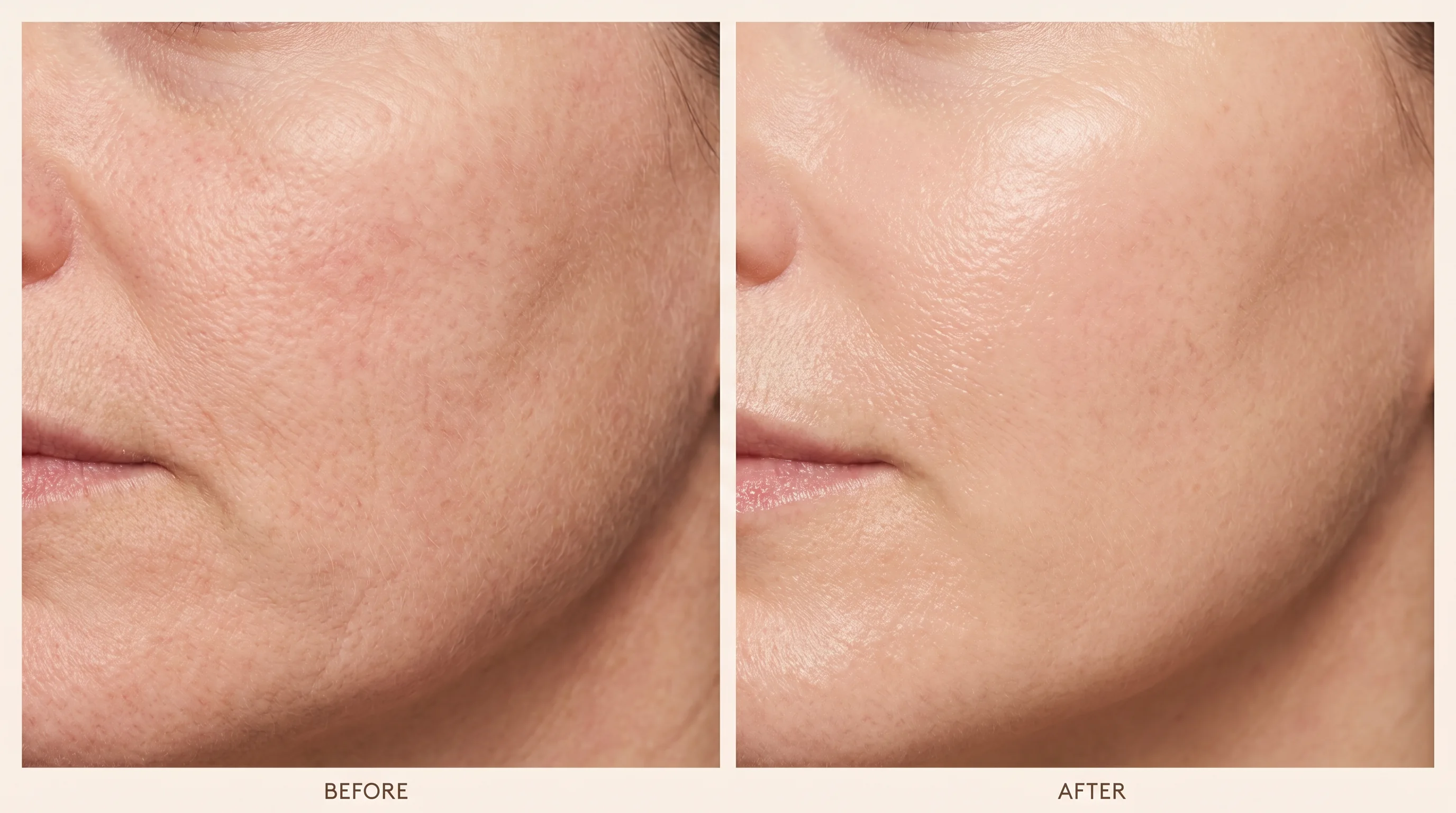
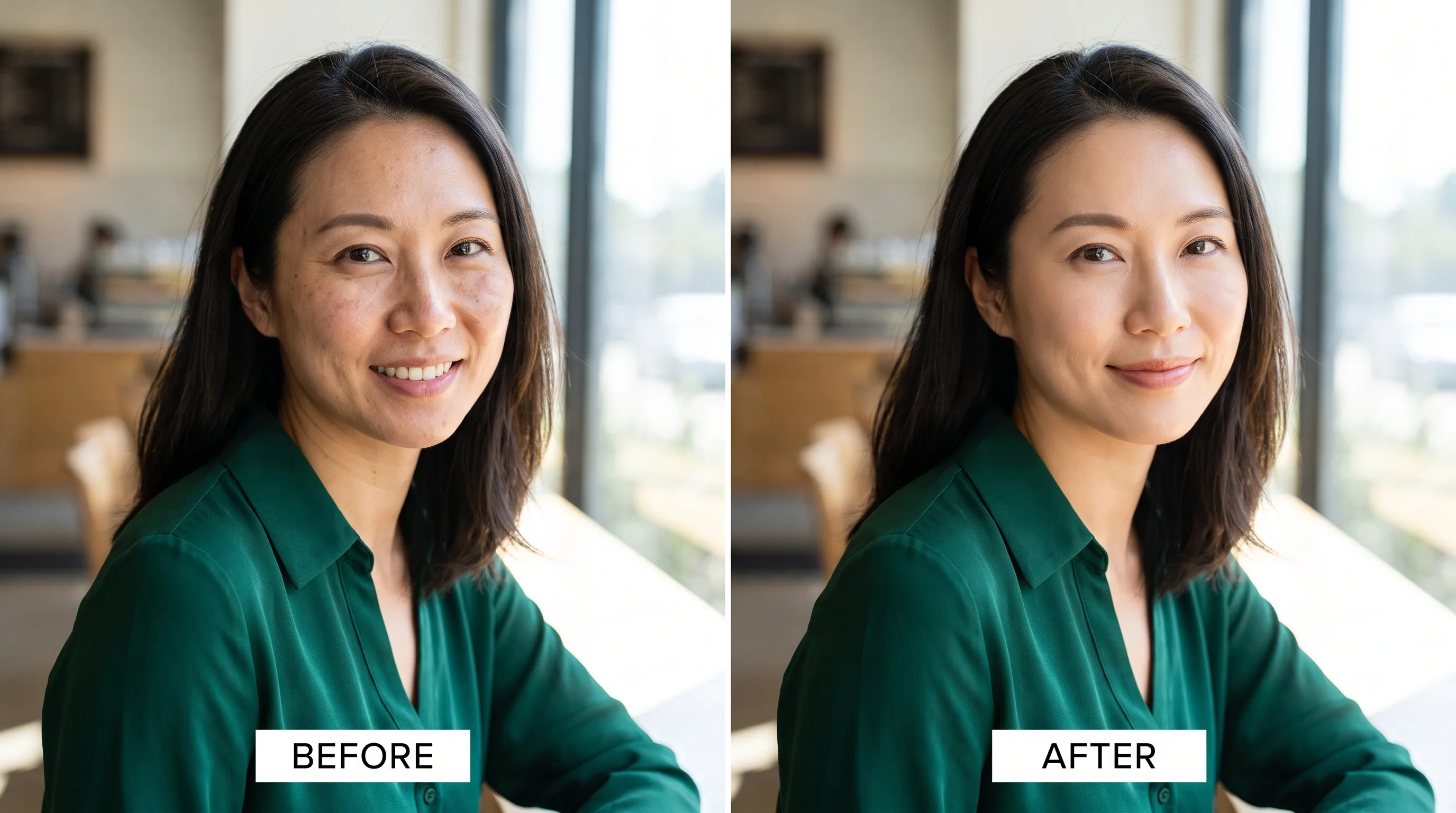
GHK-Cu is one of the most studied copper peptides in skin care, and a good before-and-after shows what it can do: smoother texture, more even tone, and firmer, healthier-looking skin over weeks. The images here are illustrative, shot under equal lighting so the change you see is the skin itself. When you look at other people's photos, a couple of simple checks help you read the real improvement, because lighting, the rest of a routine, and how much time passed can make two real photos differ.
How popular is GHK-Cu?People search for GHK-Cu about 40,000 times a month in the US, a widely searched peptide, and search interest is climbing fast (2026 search data). See the Peptide Popularity Report for the full ranking.
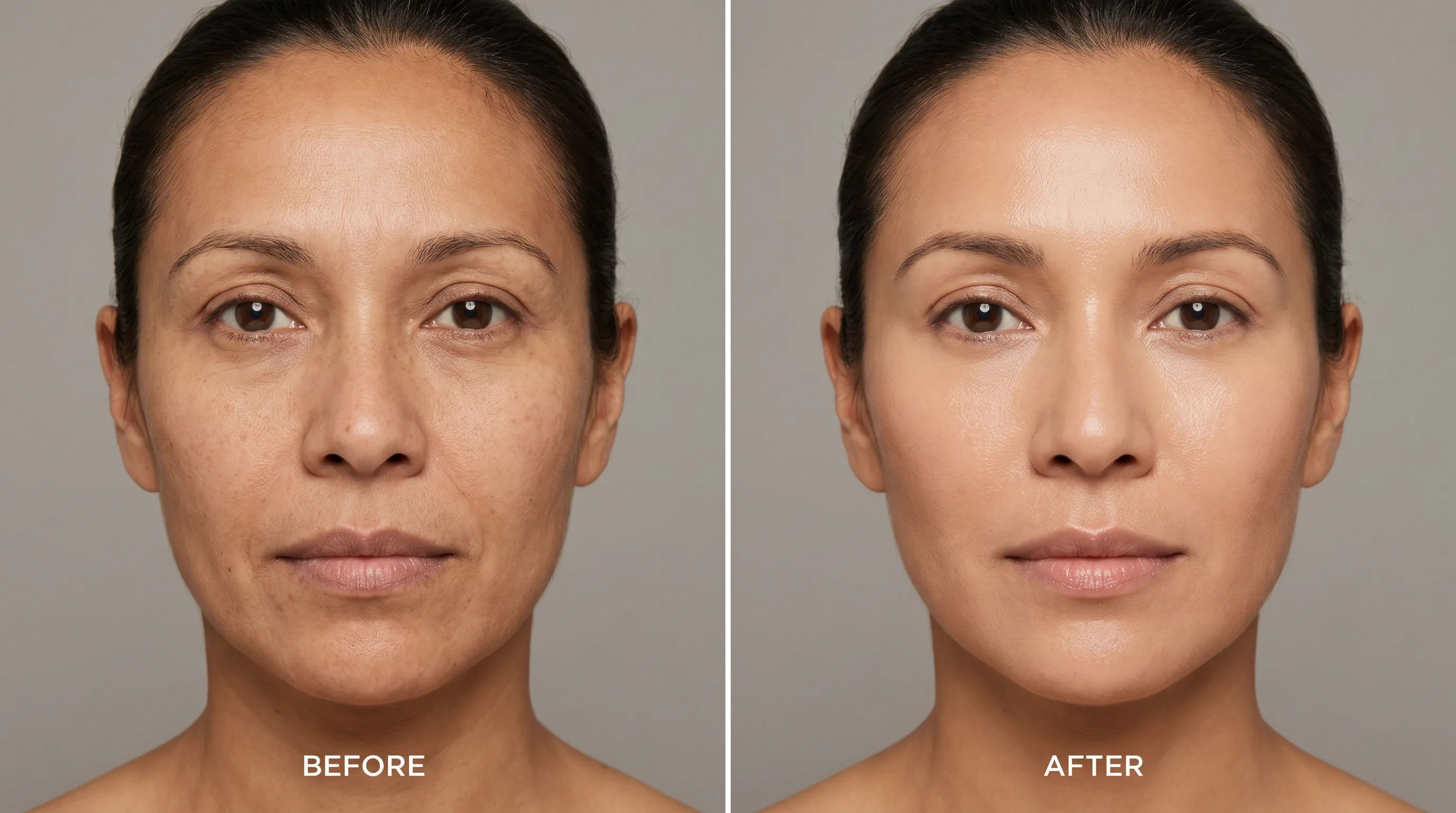
- Lighting and angle: the fairest comparisons use the same soft, even light and the same angle in both shots, so what you see is the skin and not the setup.
- The whole routine: GHK-Cu usually works alongside sunscreen, a retinoid, or vitamin C, so read the routine together and keep it consistent.
- Give it time: skin remodeling plays out over weeks, so a fair before-and-after spans a full 8 to 12 weeks of steady use.
The takeawayThe clearest before-and-afters keep the lighting and angle the same and name the routine, so you can see exactly what changed. Read them with that eye and the real improvement stands out.
What GHK-Cu is and what it is studied for
GHK-Cu is a copper-binding tripeptide, glycyl-L-histidyl-L-lysine bound to copper. Your body makes it naturally, and its levels fall as you age. It is one of the most researched peptides in skin science: because it works as a signaling molecule, it acts on fibroblasts and switches on repair-related genes, and it is studied for skin remodeling, collagen support, wound healing, and antioxidant and anti-inflammatory signaling.
The research base is deep. Reviews describe GHK and GHK-Cu boosting fibroblast activity, supporting collagen and glycosaminoglycan synthesis, and switching on a wide set of genes tied to tissue repair. That mechanism is why it anchors so many serious skin formulas.
- Supports skin remodeling and collagen-related signaling
- Studied for wound healing and tissue repair in lab and animal models
- Recognized for antioxidant and anti-inflammatory signaling
- Made naturally by the body, and declines with age
- Not on the WADA prohibited list
For a fuller mechanism walkthrough, see the GHK-Cu guide. For where it sits among other options, see copper peptides and best peptides by goal.
Realistic timelines: what changes when, and what usually does not
Skin remodeling is slow. Collagen turnover happens over weeks and months, not days, so any timeline is a range rather than a fixed schedule. Here is a realistic way to think about topical use, drawn from cosmetic-use patterns.
| Window | What some people report | How to read it |
|---|---|---|
| Weeks 1 to 2 | Skin feels smoother or more hydrated | Usually surface feel and hydration this early. A good sign you are being consistent. |
| Weeks 3 to 4 | Texture shifts, sometimes a rough patch first | A normal early adjustment for some people. |
| Weeks 5 to 8 | Tone looks more even to some users | Confounded by sunscreen, season, and other products. |
| Weeks 8 to 12 | Firmness or fine-line softening in responders | The window where remodeling is most likely to show. |
Track one thing over timePick one thing to watch, take same-lighting photos every two weeks, and give it a full 8 to 12 weeks before you judge.
GHK-Cu before and after by body area: face, neck, hands, scalp
Where you use GHK-Cu changes how quickly anything shows. Facial skin is thin and turns over faster, so it is the area people photograph first. The neck, backs of the hands, and scalp are slower. A before-and-after from one area does not predict another, so match the photo to the site you actually care about.
| Area | Why it behaves this way | A realistic way to read it |
|---|---|---|
| Face | Thinner skin, faster turnover | The area most likely to show a change first |
| Neck and chest | Thinner, sun-exposed, slower to remodel | Slower and less predictable than the face |
| Backs of hands | Thin skin but heavy sun exposure and constant use | Often the slowest to respond |
| Scalp and hair | A different biology entirely, and often an early shedding phase | Judge on a hair timeline, not a skin one |
One area at a timePick a single area, photograph only that spot under the same light every two weeks, and give it the full window. Comparing your face at week 12 to your hands at week 2 tells you nothing.
GHK-Cu for hair: a different timeline
Hair is not skin, and the before-and-after should be read on its own timeline. GHK and GHK-Cu are studied for hair-follicle and scalp-related signaling, where the copper peptide is thought to act on the dermal papilla cells that regulate the hair-growth cycle. It works alongside established hair treatments. Some people also notice mild shedding early, which can look alarming in a photo but is a commonly described adjustment for many hair actives.
- Judge hair over months, not weeks, since a follicle cycle is slow
- Early shedding, if it happens, is a commonly reported phase
- It works alongside treatments a clinician recommends
If hair is your main goal, that is a conversation for a clinician, not a photo grid. A licensed physician can walk you through what GHK-Cu is studied for and how it fits alongside your other options. See what GHK-Cu is studied for for the mechanism detail.
Side effects and the early rough patch: what is normal
Most people using topical GHK-Cu report little more than mild, temporary skin effects. Some describe an early rough or purging-like patch in the first few weeks, sometimes called the copper adjustment, before skin settles. This is a commonly described experience for some users. For the injectable form, the relevant issue is injection-site reactions, which is one more reason a prescription and pharmacy oversight matter.
- Topical: mild irritation, dryness, or a temporary rough patch for some users
- Topical: patch-test a small area first and introduce it slowly
- Injectable: injection-site irritation, with peptide compounding under active FDA review
- Any persistent irritation, spreading redness, or a reaction is a reason to stop and ask your clinician
A before-and-after cannot show tolerabilityPhotos capture appearance, not how your skin actually tolerated the product. Your own patch test and your pharmacy label tell you far more about safety than anyone else's transformation grid.
Why two people get different before-and-afters
Two before-and-afters can look different, and that is normal, not a knock on the photos. GHK-Cu is one strong input among several: age, baseline skin, sun exposure, sleep, the rest of a routine, consistency, and the formulation all shape how fast and how much shows. Reading with that in mind lets you judge a photo fairly and set an encouraging, realistic target for your own skin.
- Age and starting skin: younger, less sun-damaged skin and older, more damaged skin respond differently
- Sun exposure and daily SPF: often a bigger factor than the peptide itself
- Other actives: retinoids, vitamin C, and moisturizer routinely get credit the peptide receives
- Consistency: sporadic use over a short window rarely shows anything
- Formulation and concentration: a cosmetic serum, a compounded prescription, and a research vial are not the same product
GHK-Cu is an ingredient with a deep research base that signals your skin's fibroblasts to rebuild collagen, and its results build alongside the other inputs that shape your skin. A clinician can help you understand how it fits your skin rather than compare against someone else's photo.
How pru handles GHK-Cu
pru is a telehealth platform focused only on peptides and longevity therapies. A licensed physician reviews your intake, and if GHK-Cu is appropriate for you, it is dispensed as an individualized 503A compounded prescription through an FDA-regulated 503A compounding pharmacy. pru offers GHK-Cu as a topical cream today, the one you rub on instead of inject. It is pharmacy-grade and prescribed.
The topical form sits in Category 1 today, which is why pru offers the cream now. The injectable side is where it gets exciting: in July 2026 the FDA's Pharmacy Compounding Advisory Committee takes a serious look at compounding peptides. It's an advisory vote, not a decision.
The committee recommends, the FDA decides on its own over the following months, and even a yes wouldn't open the door overnight. It's opening, not open yet, and pru plans to offer the injectable form the right way once the path is real.
That doctor oversight and pharmacy-grade quality is what pru prides itself on. It is not FDA-approved, because compounded medications never are, and GHK-Cu is studied for skin, hair, and repair signaling rather than sold as a treatment for any condition.
Where you do see injectable copper peptide today, it is largely sold as research-grade or do-it-yourself with no individualized prescription or pharmacy oversight, and that grey-market route is the real risk. No pharmacy vouches for the identity, strength, or purity of a research-grade vial. A prescription and a real 503A pharmacy are what make pru's cream a pharmacy-grade medicine, unlike a research-grade vial ordered online or a cosmetic serum off a shelf.
- Licensed physician review before anything is prescribed
- Pharmacy-grade, 503A-compounded GHK-Cu cream, the one you rub on instead of inject
- Clear guidance on what the research shows
- Flat membership around $50 a month, with the medication itself priced at cost
Sold at costpru does not mark up the medication. You pay a flat membership and get the compounded peptide at the pharmacy's cost, with a clinician who sets expectations that fit your skin.
Caring for your skin and tissue early is a smart, proactive move, and pru is built to make that informed choice the accessible one: licensed physicians, pharmacy-grade medicine, and pricing at cost. When you are ready, take the next step. See prescribed GHK-Cu on the repair and regeneration category or the GHK-Cu product page, and review the membership and pricing.
Related reading
Common questions
Sources & further reading
- GHK Peptide as a Natural Modulator of Multiple Cellular Pathways in Skin Regeneration. PMC (pmc.ncbi.nlm.nih.gov/articles/PMC4508379/)
- Regenerative and Protective Actions of the GHK-Cu Peptide in the Light of the New Gene Data. PubMed (pubmed.ncbi.nlm.nih.gov/29986520/)
- The human tri-peptide GHK and tissue remodeling. PubMed (pubmed.ncbi.nlm.nih.gov/18644225/)
- Human skin penetration of a copper tripeptide in vitro as a function of skin layer. PMC (pmc.ncbi.nlm.nih.gov/articles/PMC3016279/)
- Bulk Drug Substances Used in Compounding Under Section 503A of the FD&C Act. FDA (fda.gov/drugs/human-drug-compounding/bulk-drug-substances-used-compounding-under-section-503a-fdc-act)
- Possible roles of the tripeptide-copper complex GHK-Cu in human hair growth. PMC (pmc.ncbi.nlm.nih.gov/articles/PMC5796340/)
- Effect of GHK-Cu on wound healing and skin: a review of the evidence. PMC (pmc.ncbi.nlm.nih.gov/articles/PMC4508379/)
- Compounding and the FDA: Questions and Answers. FDA (fda.gov/drugs/human-drug-compounding/compounding-and-fda-questions-and-answers)