How to Store Peptides in 2026: Fridge, Freezer, and Shelf Life
Where to keep peptides, what temperature to use, and how long they last, dry and after mixing.

Store peptides cold, dark, and dry. Keep dry, unmixed vials in the refrigerator at 2 to 8°C (36 to 46°F), or in the freezer near -20°C for long-term storage. Once you mix a vial with bacteriostatic water, keep it refrigerated and use it within about 28 days. Never freeze a mixed vial, and never leave one in a hot car. Above all, follow the beyond-use date printed on your pharmacy label. That date is the rule.
How to store peptides, in short
Peptides are fragile proteins, so heat, light, and moisture slowly break them down. The fix is simple: keep them cold and dark, and treat a dry vial differently from a mixed one. Dry (lyophilized) vials go in the fridge or freezer and last months. Mixed (reconstituted) vials go in the fridge and last weeks.
- Dry, sealed vials: refrigerate at 2 to 8°C, or freeze near -20°C for the longest shelf life.
- Mixed vials: refrigerate at 2 to 8°C and use within about 28 days.
- Keep every vial away from light, heat, and repeated freeze-thaw.
- Never freeze a vial after you mix it.
- When the label and this guide disagree, the label wins.
The rule that beats every rule of thumbYour pharmacy prints a beyond-use date (BUD) on the vial. It is set for your exact formulation. Always follow it over any general number you read online, including the numbers on this page.
Dry vials and mixed vials store differently
The single most important storage question is whether your vial is still dry powder or has been mixed with liquid. Dry peptide is stable for a long time. Once water goes in, the clock speeds up. Here is the side-by-side.
| Vial state | Where to keep it | Temperature | Typical use-within window |
|---|---|---|---|
| Dry, sealed (short term) | Refrigerator | 2 to 8°C (36 to 46°F) | 12 to 24 months |
| Dry, sealed (long term) | Freezer | around -20°C | Up to several years |
| Mixed with bacteriostatic water | Refrigerator only | 2 to 8°C (36 to 46°F) | About 28 days |
| Mixed, in a hot room or car | Not safe | Above 30°C / 86°F | Discard, do not use |
If you have not opened your kit yet, read how to reconstitute peptides and the bacteriostatic water guide first, so you know what you are storing and why the mixing liquid matters.
Do peptides need refrigeration? Almost always yes
Yes. Nearly all peptides used in telehealth should be refrigerated at 2 to 8°C. Short shipping trips with a cold pack are fine, and most dry vials tolerate a day or two at room temperature in transit. But home storage should be the fridge, and long-term storage of dry vials can be the freezer.
- Refrigerator (2 to 8°C): the default home for both dry and mixed vials.
- Freezer (around -20°C): only for dry, unmixed vials you want to keep for months.
- Room temperature: acceptable briefly during shipping or travel, not for storage.
- Direct heat or sunlight: never. A windowsill or a car in summer will degrade peptides fast.
Which shelf?Store vials in the main body of the fridge, on a middle shelf. Skip the door (temperature swings every time it opens) and avoid pressing vials against the back wall, where some fridges freeze. A mixed vial that accidentally freezes should be discarded.
How long peptides last, dry and after mixing
Shelf life depends entirely on state and temperature. Dry powder is stable for months to years when kept cold. A mixed solution loses potency in weeks, even in the fridge, which is why the 28-day window exists. That window comes from bacteriostatic water, which contains about 0.9% benzyl alcohol to slow microbial growth, and from USP compounding standards for preserved multi-dose vials.
Some peptides hold up a little longer once mixed, and a few pharmacies list windows out to 60 days for specific compounds. Do not guess. The beyond-use date on your label reflects the real stability data for your exact product.
Four things that degrade peptides
Peptide stability comes down to avoiding four stressors. Control these and most storage mistakes disappear.
- Heat: warmth speeds chemical breakdown. Keep vials cold and out of hot cars, windows, and bathrooms.
- Light: UV and bright light damage peptide bonds. Store in the original box or a dark drawer inside the fridge.
- Moisture and air: humidity ruins dry powder. Keep dry vials sealed until you are ready to mix.
- Agitation and freeze-thaw: shaking hard or repeated freezing and thawing breaks the amino-acid chain. Swirl gently, never shake, and never re-freeze a mixed vial.
Handle mixed vials gentlyTo mix or blend a solution, roll or swirl the vial slowly between your palms. Vigorous shaking creates foam and micro-damage that lowers potency.
Setting up your fridge and traveling safely
A good storage setup is boring on purpose: one consistent cold spot, out of the light, clearly labeled. That is all peptides need.
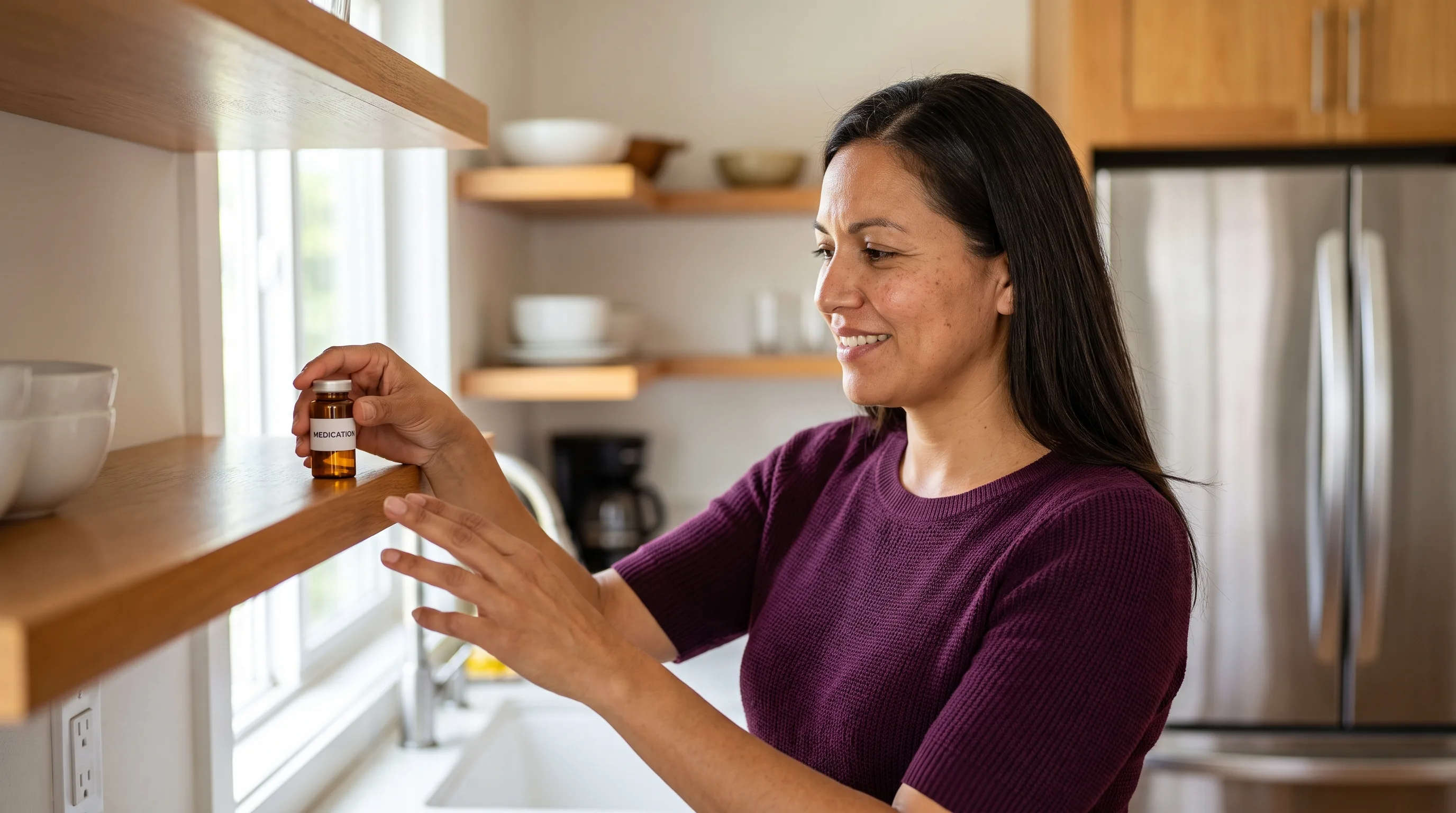
- Keep vials in their original labeled box so you can always read the peptide name and beyond-use date.
- Use the middle shelf, not the door and not the back wall.
- Write the mix date on a mixed vial the day you reconstitute it, so the 28-day clock is visible.
- For travel, use an insulated bag with a cold pack; keep vials cool, not frozen, and store them properly on arrival.
A small fridge thermometer is a cheap way to confirm you are actually in the 2 to 8°C range. Home fridges drift, especially near the door.
Storing compounded GLP-1 peptides like semaglutide
Compounded GLP-1 medications such as semaglutide and tirzepatide follow the same cold-storage logic, with one difference: many are dispensed already mixed, and some pharmacies allow a limited stretch at room temperature after first use.
- Store in the refrigerator at 2 to 8°C (36 to 46°F) as the default.
- After first use, some formulations allow up to about 21 days at room temperature (below 30°C / 86°F), if the label says so.
- The clock does not reset. Once room-temperature storage begins, do not count on returning it to the fridge to extend the date.
- The pharmacy beyond-use date is the final word for your specific vial or pen.
Compounded, not the brand penCompounded GLP-1 vials usually have a much shorter beyond-use date than a sealed brand-name pen. Read the label every time; do not assume the multi-month expiration of a retail product applies.
How pru handles storage and quality
With pru, storage guidance is built into the product, not left to guesswork. A licensed physician confirms your peptide is a fit, an FDA-regulated 503A pharmacy compounds and fills it, and every order ships with clear labeling, a beyond-use date, and a Certificate of Analysis documenting identity and purity. Peptides are billed at cost, itemized, with no markup, on a membership near $50 a month.
That path matters for storage specifically. Grey-market, research-grade vials arrive with no prescriber, no pharmacy handling record, and no reliable beyond-use date, so you cannot know how they were stored before they reached you or how long they are truly good. Pharmacy-grade vials come with the storage answer printed on the label.
Being careful about how peptides are sourced and stored is a smart, responsible way to look after your health, and pru exists to make that careful choice the accessible one: licensed physicians, FDA-regulated pharmacies, and at-cost pricing on one membership. See the reasoning in research-grade vs pharmacy-grade peptides, then browse the peptide catalog or check membership pricing when you are ready.
Related reading
Keep going with the peptide basics that pair with storage:
- How to reconstitute peptides
- Bacteriostatic water guide
- How to read a peptide Certificate of Analysis
- Research-grade vs pharmacy-grade peptides
- What is a 503A pharmacy?
- Browse the peptide catalog